
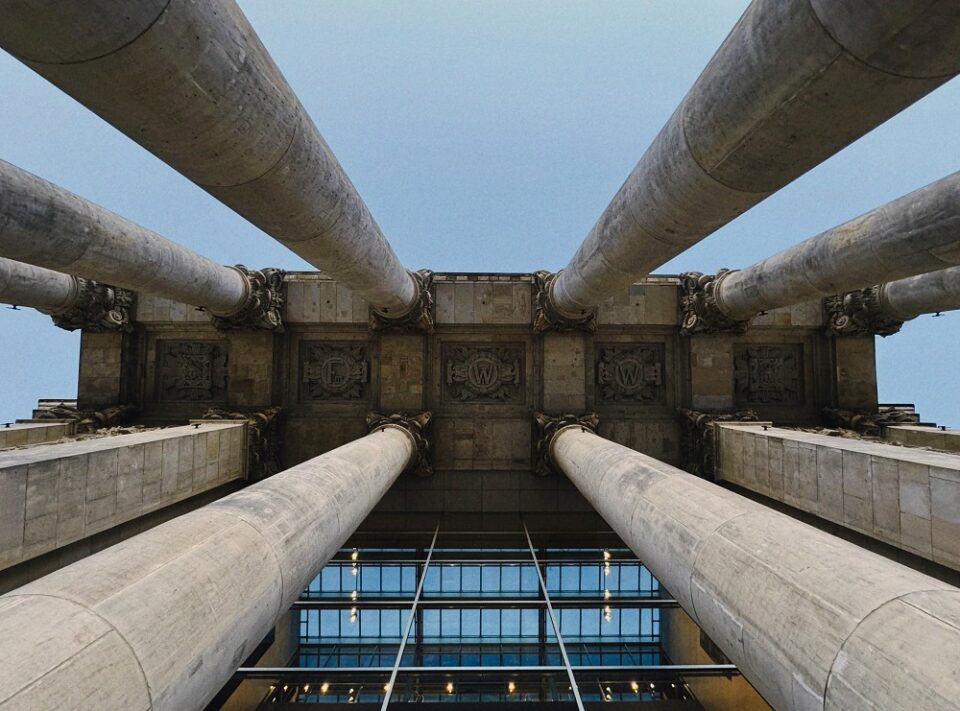
Symmetry has played a central role in classical architectural compositions for centuries. From the temples of ancient Greece to the grand civic buildings of the Renaissance and Neoclassical periods, symmetry has been used to create harmony, balance, proportion, and visual order. Classical architects believed that beauty was closely connected to mathematical precision and geometric consistency, making symmetry one of the defining principles of architectural design.
In classical architecture, symmetry is far more than a decorative choice. It reflects philosophical ideas about order, stability, and human perception. Symmetrical compositions create a sense of structure and predictability that has influenced architecture across cultures and historical periods.
Even in modern architecture, many public institutions, museums, government buildings, and luxury residences continue using symmetrical layouts inspired by classical traditions. The enduring appeal of symmetry demonstrates its importance in shaping how people experience space, proportion, and architectural beauty.
Understanding Symmetry in Architecture
Symmetry in architecture refers to the balanced arrangement of architectural elements on opposite sides of a central axis or point.
A symmetrical structure typically includes:
- Matching proportions
- Repeated forms
- Balanced spacing
- Mirrored layouts
- Geometric alignment
In classical architecture, symmetry often appears in building facades, floor plans, columns, windows, entrances, and landscape arrangements.
The most common form is bilateral symmetry, where one side mirrors the other across a central vertical axis.
This type of composition creates visual equilibrium and reinforces architectural order.
Origins of Symmetry in Ancient Civilizations
The use of symmetry in architecture dates back thousands of years.
Ancient civilizations such as:
- Egypt
- Greece
- Rome
- Persia
Used symmetrical layouts in temples, palaces, monuments, and civic spaces.
These societies associated symmetry with cosmic order, divine perfection, and political authority.
Ancient builders understood that balanced forms created a stronger psychological sense of harmony and permanence.
Religious and ceremonial structures often relied heavily on symmetrical compositions to express sacred order and cultural stability.
Greek Architecture and Mathematical Balance
Ancient Greek architecture established many of the classical symmetry principles still studied today.
Greek architects believed architecture should reflect mathematical perfection and ideal proportion.
Temples such as the Parthenon demonstrate careful symmetrical planning through:
- Even column spacing
- Balanced facades
- Proportional geometry
- Centralized entrances
- Harmonious dimensions
Greek architecture emphasized visual clarity and structural order.
Symmetry helped create buildings that appeared stable, dignified, and intellectually refined.
Greek architects also used proportional systems such as the Golden Ratio to enhance visual harmony.
Roman Architecture Expanded Symmetrical Design
Roman architects inherited many ideas from the Greeks but applied them on larger and more complex scales.
Roman architecture used symmetry extensively in:
- Public baths
- Basilicas
- Forums
- Amphitheaters
- Government buildings
The Romans combined symmetry with engineering innovation, creating monumental spaces organized around central axes and balanced layouts.
Symmetrical planning also improved navigation and spatial organization within large public structures.
Roman architecture influenced countless later architectural movements throughout Europe and the Americas.
Renaissance Architecture Revived Classical Symmetry
During the Renaissance, architects revived classical Greek and Roman principles after centuries of medieval architectural styles.
Renaissance designers viewed symmetry as essential to intellectual beauty and human-centered design.
Architects such as Andrea Palladio emphasized:
- Geometric precision
- Balanced room arrangements
- Harmonious facades
- Mathematical proportion
Renaissance villas and palaces often featured perfectly symmetrical compositions centered around grand entrances and axial organization.
The revival of classical symmetry reflected broader cultural interest in science, mathematics, philosophy, and humanism.
Symmetry Creates Visual Harmony
One of the primary reasons symmetry became so important in classical architecture is its ability to create visual harmony.
Balanced compositions naturally appeal to human perception because the brain tends to recognize order and consistency more easily than randomness.
Symmetrical buildings often appear:
- Calm
- Stable
- Organized
- Elegant
- Predictable
This visual balance creates emotional comfort and reinforces architectural coherence.
Classical architects intentionally used symmetry to guide the viewer’s eye and establish compositional unity.
Symmetry Reinforces Architectural Hierarchy
Classical architecture frequently uses symmetry to emphasize hierarchy and importance within a building composition.
Key architectural elements often align along central axes, including:
- Main entrances
- Domes
- Staircases
- Courtyards
- Pediments
This organization helps establish focal points and directs attention toward significant spaces.
For example, a grand central doorway framed symmetrically by columns immediately communicates importance and authority.
Government buildings, museums, and religious structures continue using this approach today.
Proportion and Symmetry Work Together
Symmetry alone does not guarantee successful architecture. In classical compositions, symmetry works closely with proportion.
Proportion refers to the relationship between architectural dimensions and spatial ratios.
Classical architects carefully balanced:
- Height and width
- Column spacing
- Window placement
- Structural scale
- Decorative elements
When symmetry and proportion work together effectively, buildings achieve visual unity and elegance.
Improper proportions can make even symmetrical structures appear awkward or unbalanced.
Axial Planning Defines Classical Layouts
Classical architecture often relies on axial planning, where spaces align along a dominant central line.
Axial symmetry creates strong organizational clarity within buildings and urban environments.
Examples include:
- Palace courtyards
- Cathedral interiors
- Formal gardens
- Government complexes
Axial organization allows architects to create ceremonial movement through space while maintaining balance and orientation.
Visitors naturally follow symmetrical pathways and visual alignments.
This planning strategy remains influential in urban design and landscape architecture.
Symmetry Symbolizes Power and Stability
Throughout history, rulers and governments have used symmetrical architecture to symbolize control, permanence, and authority.
Large symmetrical buildings often communicate:
- Political power
- Institutional stability
- Cultural sophistication
- Social order
Many national capitol buildings, courthouses, and memorials continue using classical symmetrical compositions for this reason.
Balanced architecture creates a sense of reliability and confidence that supports institutional identity.
Religious Architecture Uses Symmetry Symbolically
Religious architecture frequently relies on symmetry to express spiritual order and sacred balance.
Churches, temples, mosques, and other sacred structures often use symmetrical layouts to reinforce:
- Ritual organization
- Spiritual hierarchy
- Symbolic alignment
- Sacred geometry
Symmetry can create feelings of reverence, tranquility, and transcendence within religious spaces.
Classical religious architecture often positions altars, domes, and ceremonial pathways along central symmetrical axes.
Neoclassical Architecture Continued Classical Traditions
Neoclassical architecture revived classical design principles during the eighteenth and nineteenth centuries.
This movement emphasized:
- Monumental symmetry
- Columned facades
- Geometric simplicity
- Formal balance
Neoclassical buildings became especially common in:
- Government architecture
- Museums
- Universities
- Financial institutions
Symmetry helped communicate ideals associated with democracy, rationality, and civic order.
Many modern public buildings still reflect Neoclassical symmetrical traditions.
Landscape Architecture and Symmetry
Classical symmetry extends beyond buildings into gardens and landscape design.
Formal gardens often use symmetrical layouts involving:
- Straight pathways
- Mirrored plant arrangements
- Central fountains
- Geometric hedges
French classical gardens are famous for highly controlled symmetrical planning.
Landscape symmetry reinforces architectural order by extending compositional balance into outdoor environments.
The relationship between architecture and landscape becomes more unified through symmetrical organization.
Human Psychology Responds Positively to Symmetry
Research in psychology suggests that humans naturally associate symmetry with beauty, order, and stability.
Symmetrical environments are often perceived as:
- More aesthetically pleasing
- Easier to understand
- More comfortable to navigate
Classical architects intuitively understood these psychological responses long before modern scientific studies existed.
Balanced architectural compositions help reduce visual confusion and improve spatial clarity.
This may explain why symmetrical architecture continues appealing to people across cultures and historical periods.
Criticism of Excessive Symmetry
Although symmetry remains influential, some architects and critics argue that excessive symmetry can create rigid or repetitive designs.
Modern architectural movements often favor:
- Asymmetry
- Organic forms
- Dynamic compositions
- Irregular geometry
Critics sometimes view strict classical symmetry as overly formal or inflexible.
However, even many modern asymmetrical designs still rely on underlying proportional balance inspired by classical principles.
Symmetry continues evolving rather than disappearing entirely.
Contemporary Architecture Still Uses Symmetry
Modern architecture frequently incorporates symmetrical concepts in both traditional and contemporary forms.
Examples include:
- Luxury residences
- Museums
- Government complexes
- Corporate headquarters
- Urban master plans
Contemporary architects may reinterpret classical symmetry using modern materials, minimalist aesthetics, or abstract geometry.
Digital design software also allows architects to explore complex symmetrical relationships more precisely than ever before.
Symmetry remains a powerful compositional tool in modern architectural practice.
Cultural Influence of Classical Symmetry
The influence of classical symmetrical architecture extends far beyond Europe and North America.
Many cultures adopted or adapted classical principles through:
- Colonial architecture
- Government planning
- Educational institutions
- Monumental civic design
Classical symmetry became associated globally with prestige, authority, and refinement.
Its widespread influence demonstrates the enduring appeal of balanced architectural composition across diverse societies.
The Future of Symmetry in Architecture
As architecture continues evolving through technology, sustainability, and experimental design, symmetry will likely remain an important design principle.
Future architectural trends may combine:
- Classical balance
- Parametric modeling
- Sustainable planning
- Adaptive geometry
- Human-centered spatial organization
Even highly innovative architecture often relies on some degree of compositional balance rooted in classical traditions.
Symmetry continues providing architects with a framework for creating clarity, order, and visual harmony.
Conclusion
Symmetry has played a foundational role in classical architectural compositions for thousands of years. From ancient Greek temples to Renaissance palaces and Neoclassical civic buildings, symmetry has shaped how architects create balance, harmony, proportion, and spatial order.
Classical architecture uses symmetry not only for visual beauty but also for symbolic meaning, psychological comfort, and organizational clarity. Balanced compositions help communicate stability, authority, elegance, and cultural sophistication.
Although architectural styles continue evolving, the principles of symmetry remain deeply influential in both traditional and contemporary design. Its lasting presence demonstrates the enduring human appreciation for order, proportion, and harmonious architectural form.
Frequently Asked Questions
1. What is symmetry in classical architecture?
Symmetry in classical architecture refers to the balanced arrangement of architectural elements around a central axis or focal point.
2. Why was symmetry important in ancient architecture?
Ancient architects associated symmetry with order, beauty, stability, and mathematical perfection.
3. How did Greek architecture use symmetry?
Greek architecture used symmetry through balanced facades, proportional columns, centralized entrances, and geometric planning.
4. What role does symmetry play in visual harmony?
Symmetry creates visual balance and consistency, making buildings appear more organized, stable, and aesthetically pleasing.
5. Is symmetry still used in modern architecture?
Yes, many modern buildings continue using symmetrical principles, especially in civic, institutional, and luxury architectural design.
6. What is axial symmetry in architecture?
Axial symmetry organizes spaces along a central line or axis, creating structured movement and balanced spatial layouts.
7. Can architecture be successful without symmetry?
Yes, many modern architectural styles use asymmetry successfully, although balanced proportion and composition remain important design principles.
